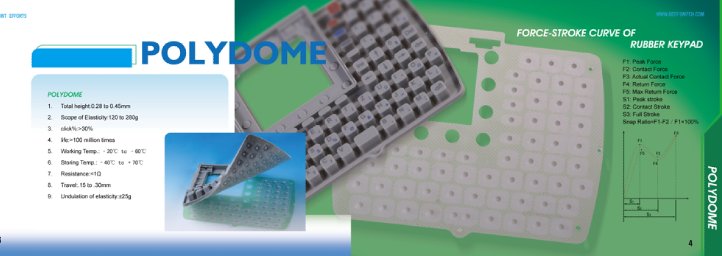
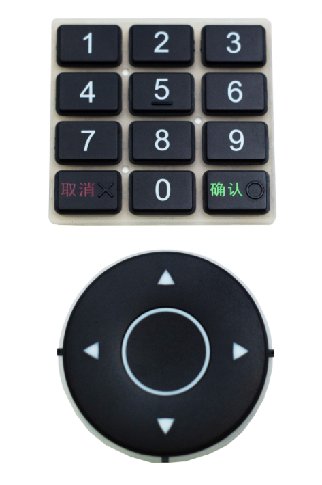
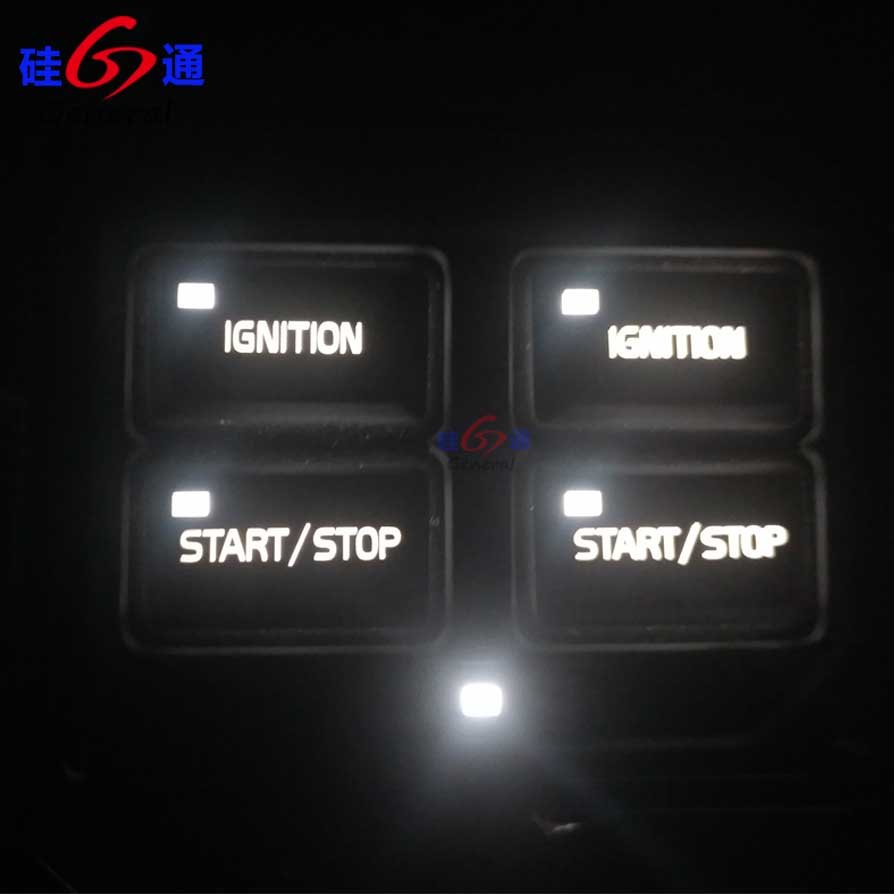
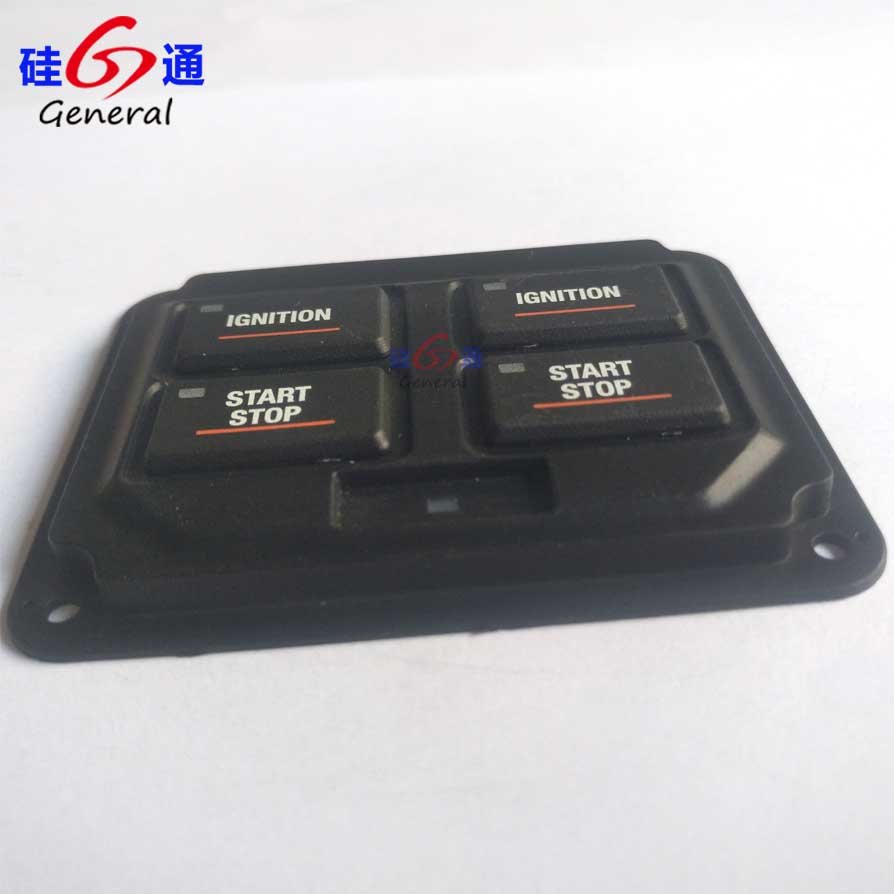
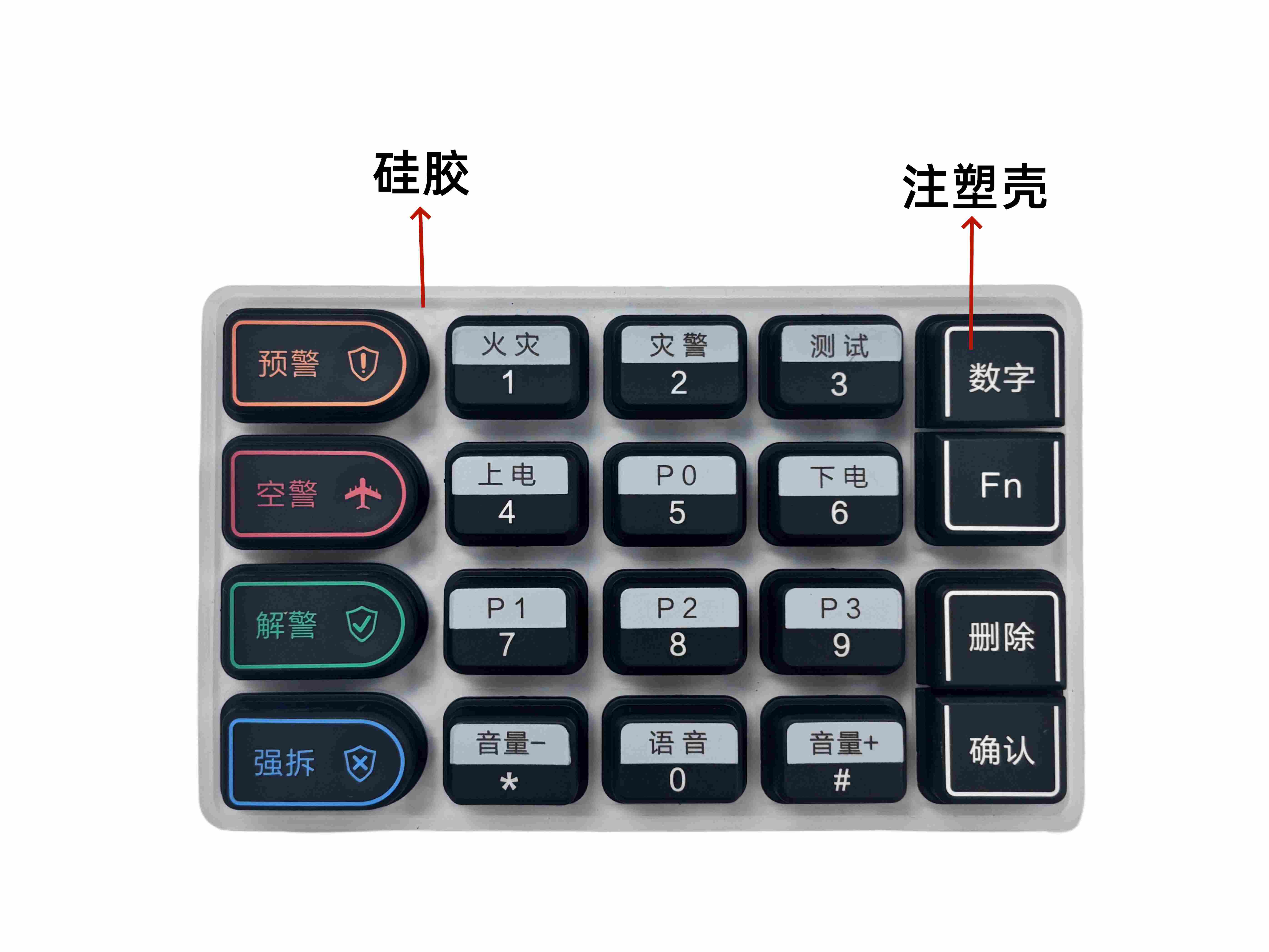
Custom rubber keypads with conductive carbon pills. P+R (Plastic + Rubber) over-molded composite keypads for premium feel. Wide temperature range (-40 to 230°C). For mobile phones, car keys, remote controls, and industrial devices.
Request Quote →| Parameter | Value / Range |
|---|---|
| Material | Semi-transparent silicone rubber |
| Hardness | 40 ~ 70 Shore A |
| Contact | Conductive carbon pill / Gold plated |
| Operating Temperature | -40°C ~ +230°C |
| Lifetime | ≥500,000 cycles |
| Actuation Force | 50g ~ 400g (custom) |
| Travel | 0.5mm ~ 1.5mm |
| Composite Molding | P+R (Plastic + Rubber) over-molding |
| Color Options | Any PMS color, translucent, fluorescent |
| Legend Printing | Silk screen, laser engraving, dual-shot |
| Backlight | LED light guide / EL panel compatible |
| Standards | RoHS, REACH compliant |
Natural rubber-like resilience for comfortable typing.
Any PMS color, translucent, fluorescent, or dual-shot legends.
-40°C to +230°C. Perfect for automotive and outdoor use.
Hard plastic base + soft rubber key cap for premium look and feel.
Light guide plate or EL panel integration for illuminated keys.
Carbon pill or gold plated contacts for reliable switching.
Silicone rubber keypads offer exceptional environmental resistance and design flexibility, making them the preferred interface for applications requiring extreme temperature tolerance, soft tactile feel, and cost-effective custom molding. BestSwitch manufactures both conductive silicone keypads and P+R (plastic + rubber) composite keypads:
Car key fobs operate across wide temperature ranges — from sub-zero winter conditions to sun-heated summer interiors reaching 80°C+. Our silicone rubber keypads with conductive carbon pill contacts maintain consistent actuation force and electrical performance from -40°C to +230°C. P+R composite molding produces durable key caps with hard plastic tops bonded to soft silicone bases, combining premium aesthetic appearance with reliable sealing against dust and moisture ingress.
Industrial communication devices require rugged pushbuttons that withstand drops, dust, and repeated use in outdoor environments. Our silicone keypads feature compression-molded one-piece construction for integrated sealing, custom key travel (0.5mm to 1.5mm) for gloved-hand operation, and laser-etched legends that remain legible through years of abrasion and UV exposure.
Diagnostic equipment, patient monitors, and portable medical devices benefit from silicone keypads' naturally sealed construction and biocompatible material options. We offer medical-grade silicone formulations that pass cytotoxicity testing, with legend printing options including dual-shot molding for permanently embedded graphics that cannot wear off.
Silicone keypad customization includes: hardness range (40 to 70 Shore A), actuation force (50g to 400g), travel distance (0.5mm to 1.5mm), key cap shape and size (round, square, rectangular, custom contour), color matching (any PMS color, translucent, fluorescent), legend printing method (silk screen, laser engraving, dual-shot molding, or pad printing), contact type (conductive carbon pill, gold-plated pill, or metal dome insert), backlight integration (LED light guide or EL panel), and surface texture (matte, gloss, or soft-touch coating).
Every silicone keypad batch is tested for: actuation force uniformity across all keys (±15% tolerance), contact resistance (<100 ohms for carbon pill), insulation resistance (>100MΩ at 500V DC), key travel and return characteristics, legend print durability (tape test and solvent rub test per ASTM D4752), and life cycle testing (≥500,000 actuations at room temperature and ≥50,000 actuations at temperature extremes). Material certification includes RoHS and REACH compliance documentation.
The base material for silicone rubber keypads is typically a two-part addition-cure liquid silicone rubber (LSR) that cross-links to form a durable elastomer. Key material properties include hardness (measured on the Shore A scale, typically 40-70 for keypad applications), tensile strength (usually 6-12 MPa for general-purpose grades), tear resistance (20-60 N/mm), and compression set (the permanent deformation after prolonged compression, ideally below 20% at elevated temperatures). Specialized formulations are available for specific requirements: high-temperature grades rated to 230 degrees Celsius continuous exposure, low-temperature grades remaining flexible down to -60 degrees Celsius, flame-retardant grades meeting UL 94 V-0 requirements, and medical-grade formulations passing ISO 10993 biocompatibility testing for skin contact applications.
The electrical contact mechanism is a critical design element of silicone keypads. Conductive carbon pills are the most common and cost-effective contact method, consisting of a carbon-impregnated silicone button molded integrally with the keypad. The carbon pill provides contact resistance typically below 100 ohms when mated to a gold-plated or carbon-coated PCB contact pad. For applications requiring lower contact resistance (below 10 ohms) or higher current carrying capacity, gold-plated metal contact pills can be inserted into the silicone key during the molding process. These hybrid contacts combine the flexibility and environmental sealing of silicone with the superior electrical performance of metal contacts. For applications requiring extended life (2 million cycles or more), conductive silicone formulations with specially treated carbon black fillers maintain stable contact resistance through reduced surface oxidation and improved particle-to-particle conductivity over the product lifetime.
P+R (Plastic + Rubber) composite keypads combine the structural rigidity of injection-molded plastic key caps with the flexibility and sealing properties of silicone rubber bases. The process involves two steps: first, individual plastic key caps are injection-molded from engineering thermoplastics such as ABS, PC, or PC/ABS blends with the desired surface finish, color, and legend marking applied. These key caps are then loaded into a silicone compression mold where they are bonded to the silicone rubber base during the curing process. The bond between the plastic and silicone layers is both mechanical (through undercuts and through-holes in the plastic part) and chemical (through a primer or adhesive applied to the plastic surface before molding). P+R keypads offer the premium look and feel of hard plastic key surfaces with the tactile performance and environmental sealing of silicone rubber, making them the preferred choice for automotive interior switches, premium remote controls, and medical device keypads where both aesthetics and durability are critical.
Silicone rubber keypad manufacturing at BestSwitch follows rigorous quality guidelines established by international standards organizations. Our compression molding processes are qualified to meet ASTM D2000 M2SA 705 A1B1E1F1 material classification for general-purpose silicone elastomers when specified. Keypad dimensional tolerances are maintained to ISO 3302-1 class M2 for molded rubber products, ensuring consistent part-to-part fit across production batches. For automotive applications, our silicone keypads can be qualified to LV 124 (German OEM test standard for electrical components) for environmental testing and USCAR-2 (US Council for Automotive Research) for electrical connector testing protocols where applicable. We also provide material data per ISO 1629 for silicone rubber classification and ISO 48 for hardness measurement traceability. All dyes and pigments used in keypad coloring are FDA-compliant for incidental food contact applications where the keypad may be used in food preparation or food service environments.
We can tailor the design, materials, dimensions, and finish to your exact requirements. Send us your specifications for a free review.
Contact Sales Team