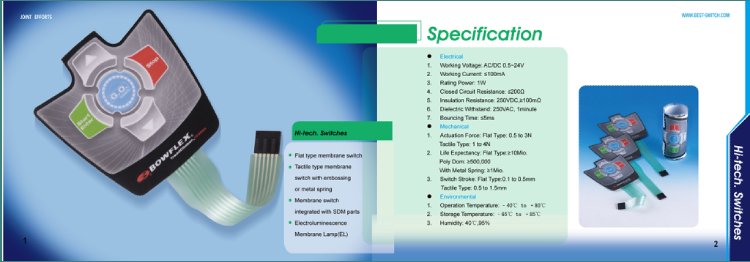
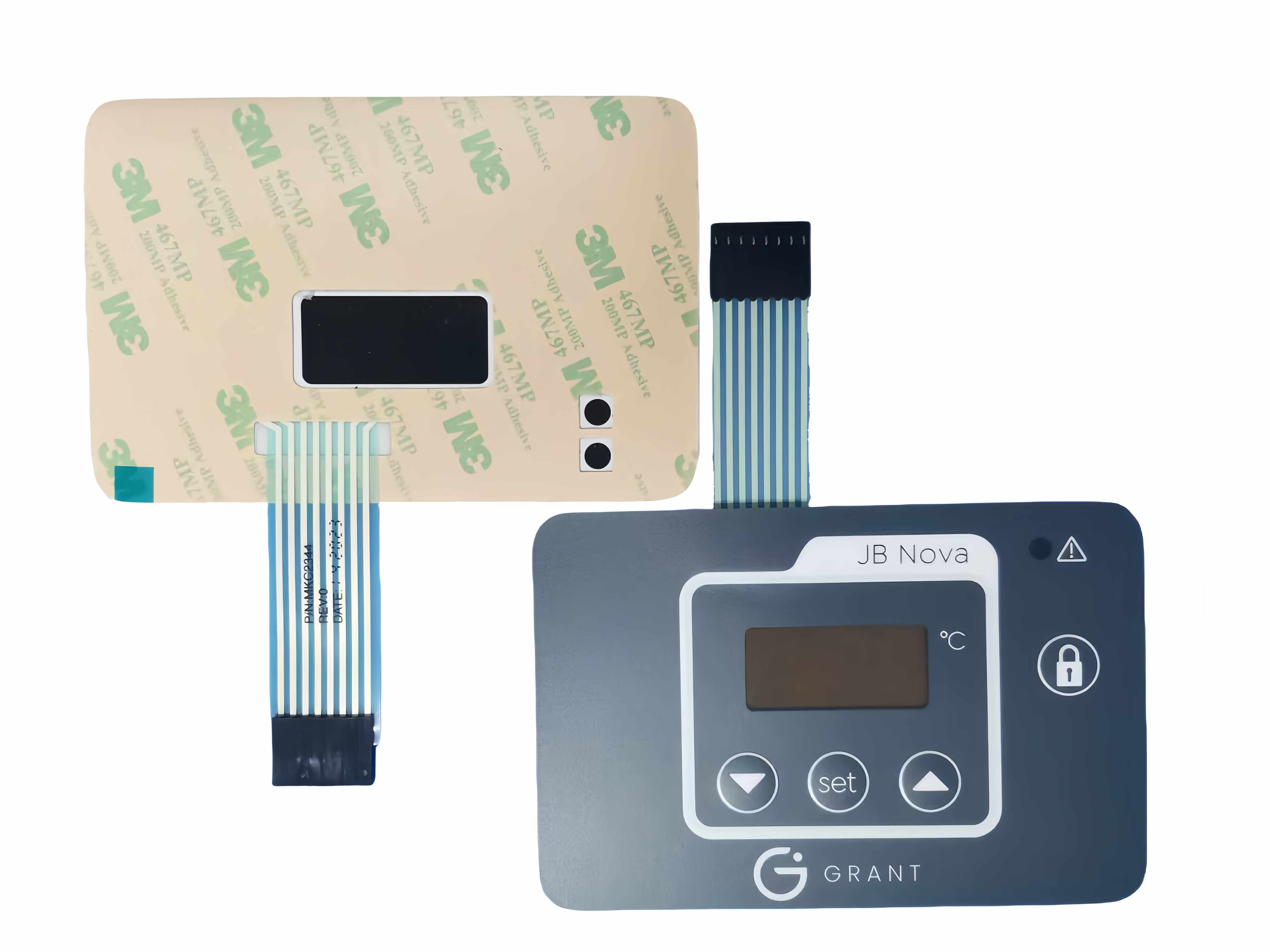
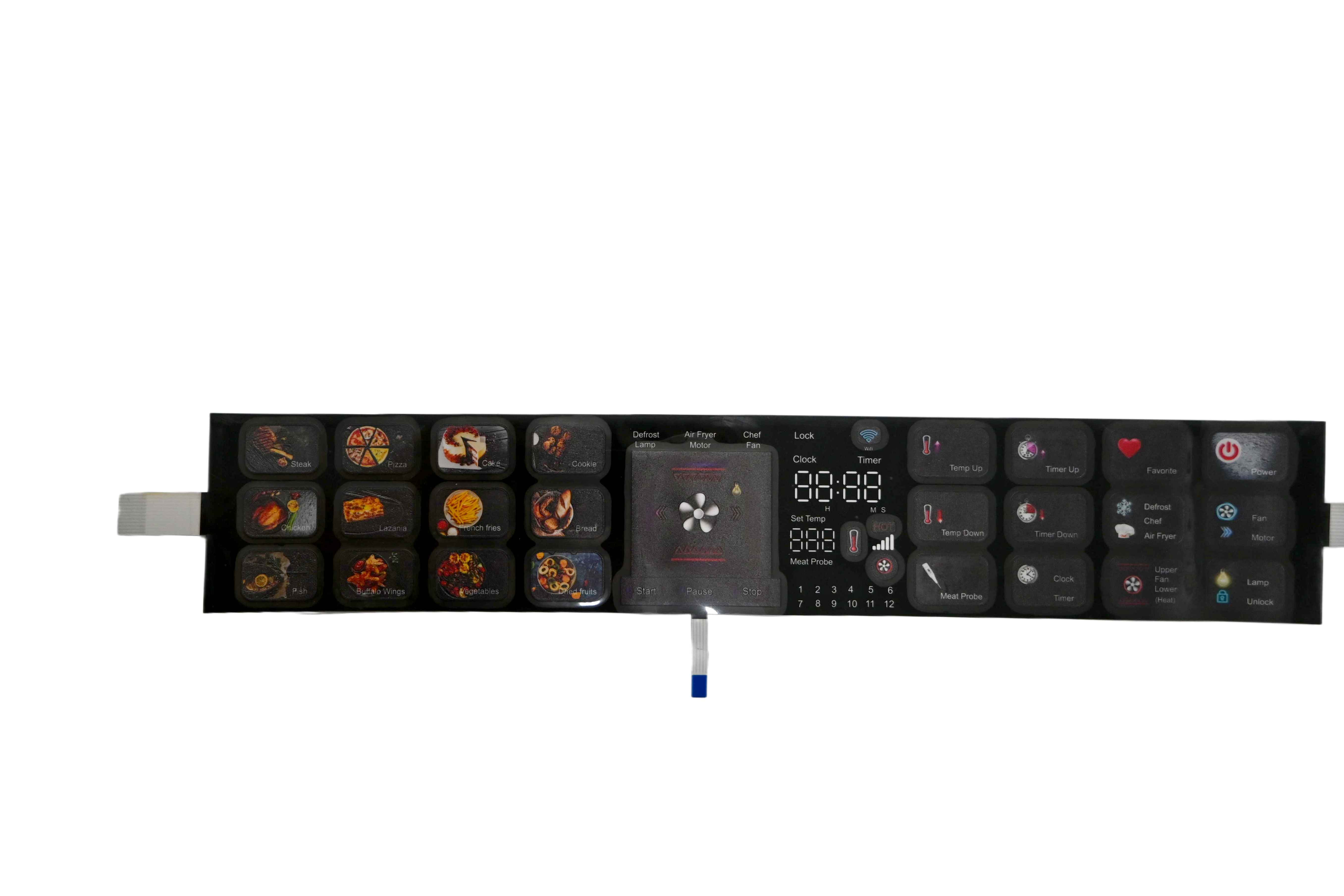
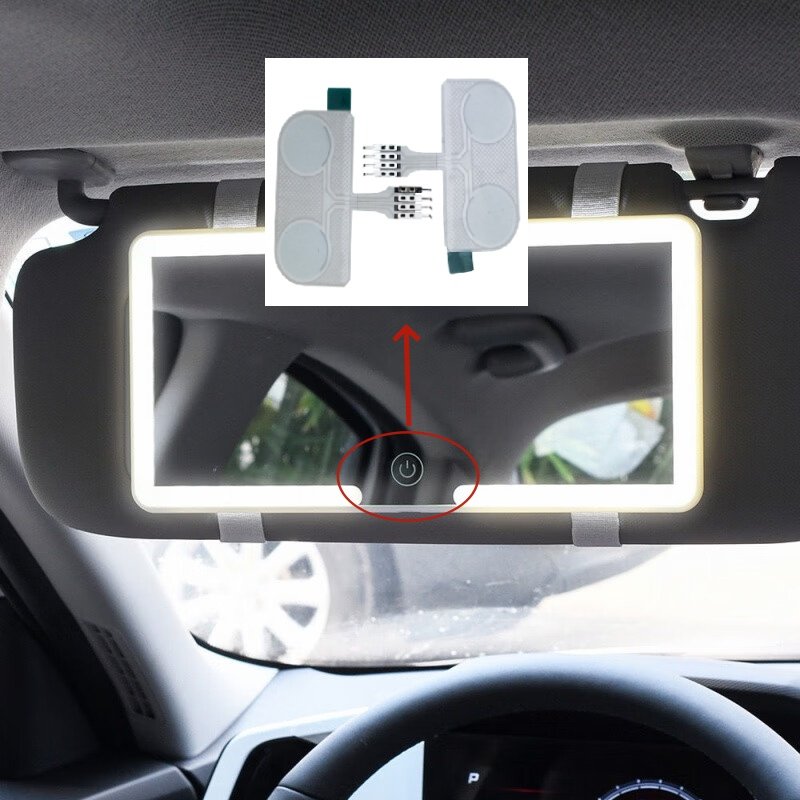
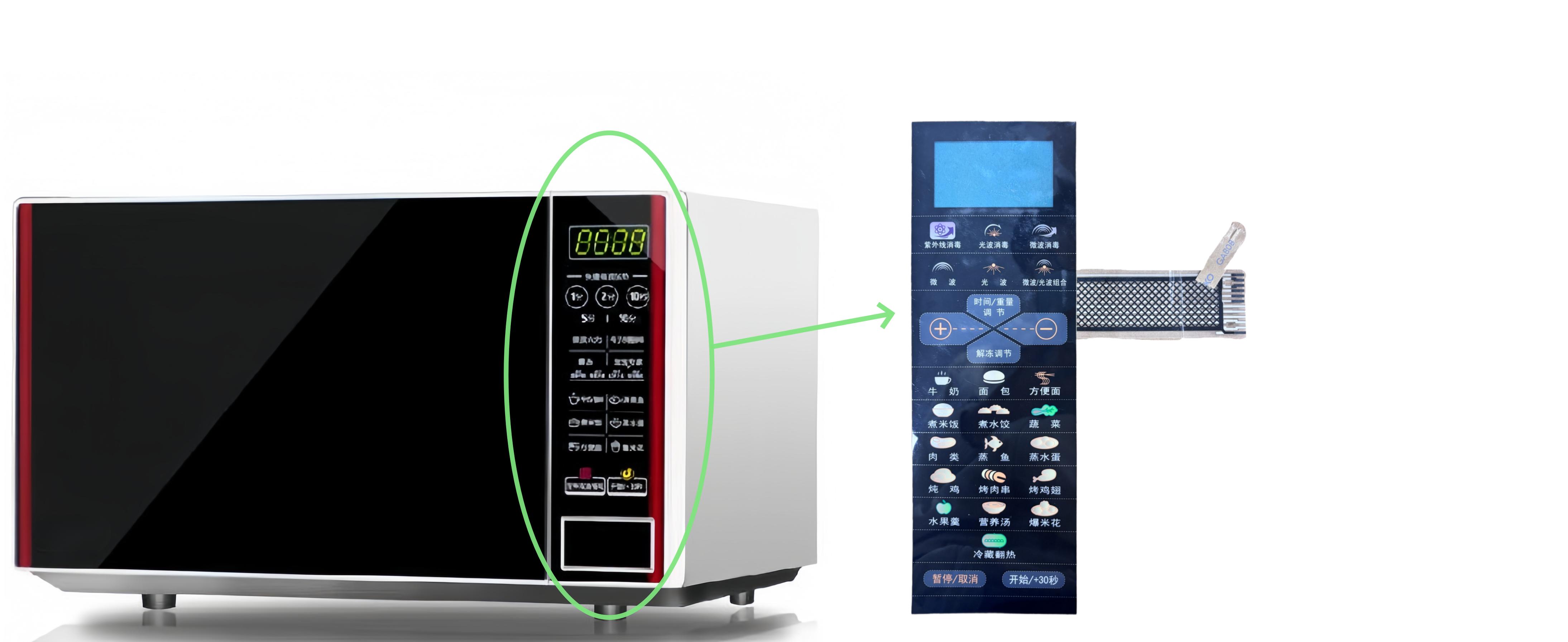
Custom membrane switches with tactile/non-tactile feedback, LED backlight, and waterproof coating. PC/PET substrates with silver ink or FPC circuits. Ideal for medical devices, fitness equipment, industrial controls, and smart home appliances.
Request Quote →| Parameter | Value / Range |
|---|---|
| Operating Voltage | ≤50V DC |
| Operating Current | ≤100mA |
| Contact Resistance | 10Ω ~ 500Ω (customizable) |
| Insulation Resistance | ≥100MΩ at 500V DC |
| Dielectric Withstand | 250V DC for 1 minute |
| Lifetime | ≥1,000,000 cycles |
| Actuation Force | 15g ~ 750g (custom) |
| Operating Temperature | -20°C ~ +60°C |
| Substrate Material | PC / PET |
| Circuit Type | Silver paste / Carbon ink / FPC |
| Backlight | SMT LED (custom colors) |
| Surface Finish | Matte, Glossy, UV coating, Anti-glare |
| Adhesive | 3M 9495 / Custom specification |
| Shielding | Anti-static aluminum foil (optional) |
Any size, shape, and layout. Flexible for curved or flat surfaces.
SMT LEDs for low-light visibility. RGB option for branding.
UV-cured waterproof coating. IP65 rated for wet environments.
Embedded FPC connector for reliable ZIF/FFC connection.
High-definition screen printing with UV-resistant ink.
ESD shielding layer for sensitive electronic environments.
Custom membrane switches from BestSwitch are engineered for a wide range of industrial and commercial applications. Their low-profile design, excellent sealing properties, and customizable interface make them the preferred choice for human-machine interfaces across these sectors:
Patient monitors, infusion pumps, diagnostic analyzers, and ventilators require contamination-resistant control panels that can be easily sanitized. Our membrane switches feature sealed construction (IP65 rated), smooth non-porous surfaces, and UV-cured coatings that withstand repeated cleaning with medical-grade disinfectants. We offer custom tactile zones that provide clear feedback even when operators wear latex gloves.
Treadmills, elliptical trainers, and strength machines need durable, sweat-resistant control interfaces. Our membrane switches for fitness equipment incorporate anti-static shielding to prevent interference with sensitive electronics, LED backlighting for low-gym visibility, and high-cycle-life contacts rated for over 1 million actuations.
Factory automation, CNC machinery, and process control equipment rely on rugged input devices. We offer membrane switches with chemical-resistant polyester overlays, ESD protection layers, and customizable circuit designs that integrate directly with PLC and microcontroller interfaces.
Every membrane switch can be tailored to your exact specifications. Available customization parameters include: substrate thickness (0.125mm to 0.5mm PET/PC), circuit type (silver paste, carbon ink, or embedded FPC), LED backlight color and brightness, surface finish (matte, gloss, anti-glare, or UV-textured), adhesive selection (3M 9495 or custom specification), connector type (ZIF, FFC, solder pins, or custom cable), embossing depth and shape for tactile keys, and electrostatic shielding layer integration.
Each membrane switch undergoes rigorous quality control before shipment. Standard tests include contact resistance measurement (4-wire Kelvin method), insulation resistance testing at 500V DC, dielectric withstand voltage at 250V DC for 60 seconds, actuation force verification within ±15% of specification, and visual inspection for print registration, bubble defects, and adhesive coverage. Sample products from each batch are submitted to accelerated life testing — 1 million cycle actuation tests at room temperature and 100,000 cycle tests at temperature extremes (-20°C and +60°C) to validate long-term reliability.
The tactile feedback in a membrane switch is primarily determined by the dome geometry and material properties. Metal dome switches provide crisp snap-action feedback with a distinct tactile ratio (the percentage of force drop-off after actuation) typically ranging from 50% to 80%. Domes with higher tactile ratios provide more positive confirmation of actuation but may produce more audible noise. The actuation force profile is characterized by three key parameters: peak force (the maximum force required to actuate the switch), snap ratio (the percentage reduction in force after the dome collapses), and contact force (the force maintained at full travel). These parameters can be independently tuned by adjusting dome diameter, material thickness, heat treatment, and forming geometry to match the specific requirements of each application.
Membrane switches can be sealed against environmental contaminants through several methods. The most common approach is adhesive sealing, where the graphic overlay layer is bonded to the circuit layer using pressure-sensitive adhesive (PSA) around the entire perimeter. For higher levels of protection, we offer UV-cured edge sealing that fills microscopic gaps in the adhesive bond line, achieving IP65 or IP67 ratings. For applications requiring submersion protection (IP68), we can incorporate silicone rubber gasket seals or overmolded peripheral sealing. Chemical resistance testing is performed using standardized test fluids including isopropyl alcohol, hydrogen peroxide, bleach solutions, and industrial cleaning agents to ensure compatibility with the target operating environment.
The electrical connection between a membrane switch and the host device can be configured in multiple ways. ZIF (zero insertion force) connectors are the most common for internal connections, offering reliable contact without requiring soldering. FFC (flexible flat cable) extensions are suitable when the switch assembly is mounted remotely from the main PCB. Crimp-style connectors with solder pins provide the most robust mechanical connection for high-vibration environments such as automotive or industrial applications. For custom requirements, we can integrate wire harnesses with customized connectors including JST, Molex, Hirose, and other industry-standard types, terminated directly to the membrane circuit during the lamination process.
The integration of electronic components directly into membrane switch assemblies has become increasingly sophisticated. Beyond simple LED backlighting, we can incorporate resistors, capacitors, diodes, and even microcontroller ICs onto the membrane circuit substrate using SMT assembly techniques. This allows membrane switch assemblies to function as complete input/output modules with built-in intelligence, communicating with the host system via I2C, SPI, or USB interfaces. Active components are protected using encapsulation or conformal coating to maintain the environmental sealing integrity of the overall assembly.
All membrane switch products manufactured at BestSwitch comply with industry testing standards established by IPC and other recognized bodies. Our standard membrane switch assemblies are designed and tested in accordance with IPC-CC-830 (qualification of conformal coatings) and IPC-TM-650 (test methods manual) for electrical and mechanical performance verification. We also follow UL 746C for polymeric materials evaluation and IEC 61058 for switch performance testing where applicable. For clients requiring specific certifications for their end products, we provide comprehensive material documentation including UL yellow card information for flame-retardant materials, RoHS compliance certificates with test data from accredited third-party laboratories, and REACH SVHC declaration statements. Our commitment to industry-standard testing ensures that our membrane switch assemblies meet the reliability expectations of demanding applications across medical, industrial, automotive, and consumer markets.
The performance and reliability of a custom membrane switch depend heavily on material selection and manufacturing precision. At BestSwitch, we use only industry-grade raw materials sourced from established global suppliers to ensure consistent quality across every production batch. Understanding the materials and technologies behind membrane switch production helps our clients make informed decisions when specifying their custom components.
The substrate layer forms the structural foundation of a membrane switch. Polyethylene terephthalate (PET) film is the most commonly used substrate, offering excellent flexibility, dimensional stability, and electrical insulation properties. PET substrates are available in thicknesses from 0.075mm to 0.5mm, with the thinner films used for flexible circuit layers and thicker films for top graphic overlays that require rigidity. Polycarbonate (PC) film provides higher impact resistance and temperature tolerance than PET, making it the preferred choice for applications in industrial environments where mechanical stress or elevated temperatures are encountered. We work with clients to select the optimal substrate based on their specific application requirements, considering factors such as expected operating temperature range, required flexibility, and optical clarity for backlit designs.
The conductive circuit layer is the functional heart of a membrane switch. Our standard silver paste printing process uses screen-printable silver-filled polymer ink that forms conductive traces with typical resistivity of 0.02-0.05 ohms per square at 25 micron thickness. For applications requiring higher conductivity or where circuits must pass tight bend radii, we offer carbon ink circuits as a cost-effective alternative. For the most demanding electrical performance requirements, we integrate flexible printed circuit (FPC) technology into membrane switch assemblies, embedding copper traces on polyimide film that can carry higher currents and provide controlled impedance for signal integrity. Each circuit type undergoes 100% electrical testing to verify continuity, insulation resistance, and dielectric withstand voltage.
Surface treatments and coatings play a vital role in membrane switch durability. UV-cured hard coatings provide abrasion resistance and chemical protection, with pencil hardness ratings up to 3H. Anti-glare and anti-fingerprint coatings improve user experience in display-integrated designs. For outdoor or medical applications requiring frequent sanitization, we apply hydrophobic coatings that resist fluid ingress and simplify cleaning.
Backlighting technology has advanced significantly in recent years. Our standard LED backlighting uses surface-mount technology (SMT) LEDs embedded within the switch layers, providing uniform illumination at power consumption as low as 20mA per LED at 3.0V forward voltage. We offer single-color, bi-color, and RGB LED options with brightness levels adjustable to client specifications. For applications requiring ultra-low power consumption or thinner profiles, we offer electroluminescent (EL) backlighting panels that can be as thin as 0.3mm while providing even illumination across the entire switch surface.
We can tailor the design, materials, dimensions, and finish to your exact requirements. Send us your specifications for a free review.
Contact Sales Team