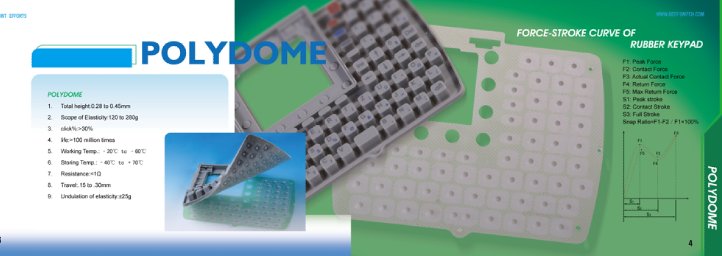
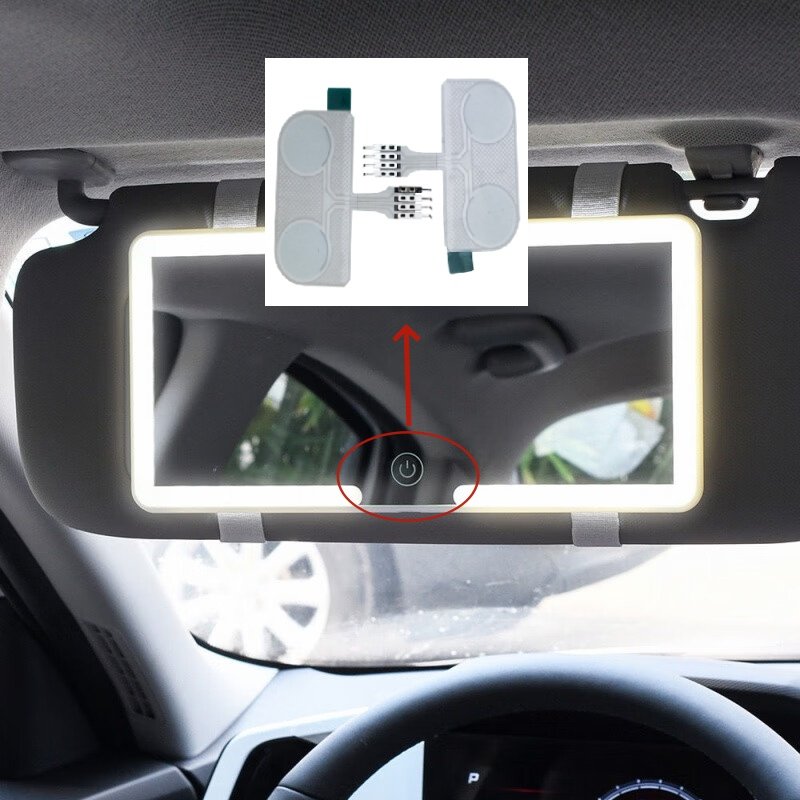
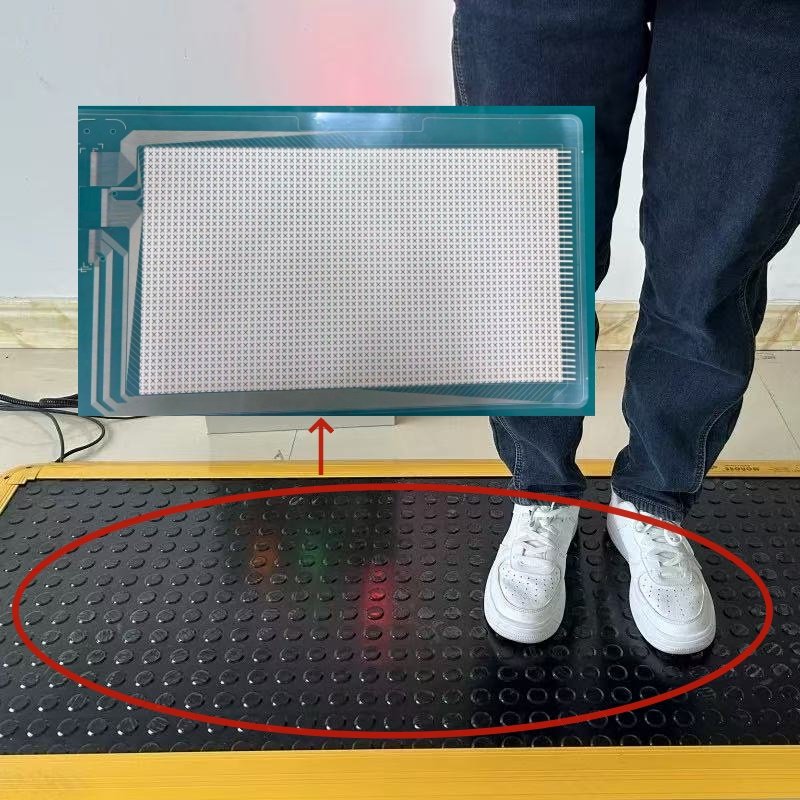
Cost-effective polyester dome membrane switches without metal dome. Heat-pressed convex bump for tactile feel. Low-cost alternative for consumer electronics, home appliances, and simple control panels.
Request Quote →| Parameter | Value / Range |
|---|---|
| Material | PET polyester film |
| Dome Height | 0.40mm ~ 0.65mm (heat-pressed) |
| Actuation Force | 100g ~ 400g |
| Click Ratio | 50% ~ 80% |
| Lifetime | ≥500,000 cycles |
| Operating Temperature | -20°C ~ +60°C |
| Circuit Type | Silver paste / Carbon ink |
| Substrate | PC / PET |
| Backlight | SMT LED compatible |
| Waterproof | UV coating (optional) |
| Adhesive | 3M 9495 / Custom |
No metal dome components — significantly lower unit cost.
Polyester dome offers softer sound than metal dome.
Heat-pressed convex dome provides consistent tactile response.
Fewer layers than traditional membrane switch. Reliable and easy to assemble.
Full color printing with durable UV-cured inks.
Total thickness as low as 0.5mm for space-constrained designs.
Polydome membrane switches combine the tactile feedback of metal domes with the flexibility and cost efficiency of polyester-based switch construction. The term polydome refers to dome-shaped polyester or polycarbonate film structures that are formed into the top circuit layer, providing tactile snap-action feedback without the need for separate metal dome components. This integrated dome design offers several advantages for high-volume applications where consistent tactile performance and cost optimization are equally important.
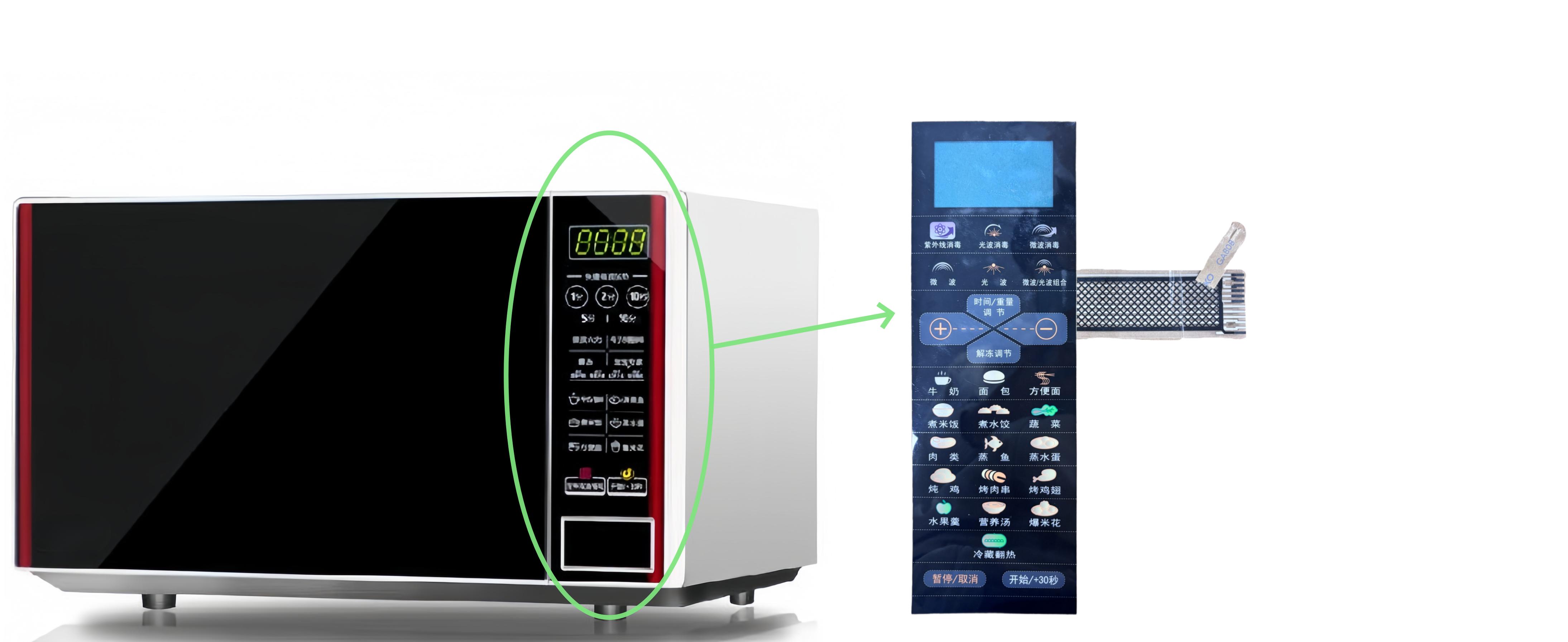
Our polydome switches are ideal for fitness equipment consoles, medical devices, home appliance control panels, and consumer electronics where reliable tactile feedback is required at a competitive price point. Key features include: actuation force range from 100g to 400g with consistent tactile ratio across the entire switch array, operating life of 500,000 to 1 million cycles depending on dome geometry and material selection, low profile construction with total assembled thickness of less than 1.5mm including adhesive layers, and integrated LED backlighting options for low-light visibility.
Polydome switches can be customized with options including: dome diameter from 6mm to 20mm, actuation force tailored to application requirements, surface treatments including hard coating for abrasion resistance and anti-glare for display integration, connector types including ZIF, FFC, and solder pins, waterproof construction up to IP67 with UV-cured edge sealing, and custom graphic overlays with silk-screen or digital printing with protective hard coating.
Each polydome switch undergoes 100% electrical testing including contact resistance measurement, insulation resistance testing, and actuation force verification. Sample products from each production batch are subjected to accelerated life testing of 500,000 cycles minimum, temperature cycling from -20C to +60C for 50 cycles, and humidity exposure at 85% RH and 60C for 96 hours. All materials are RoHS and REACH compliant, with documentation provided upon request.
When selecting between polydome (polyester dome) and metal dome membrane switch technologies, several factors should be considered including cost targets, tactile feel requirements, operating environment, and production volume. Understanding the differences between these two approaches helps product designers and procurement professionals make informed decisions that balance performance requirements with budget constraints.
Polydome switches offer a significant cost advantage over metal dome switches because the dome structure is formed directly into the polyester circuit layer during the screen printing and heat-pressing process. This eliminates the need for separate metal dome components, the PET carrier film needed to position them, and the additional assembly step required to place metal domes onto the circuit. For high-volume applications producing 10,000 units or more per year, the cost savings from polydome construction can range from 15% to 40% compared to an equivalent metal dome design. This makes polydome switches particularly attractive for consumer electronics, home appliances, and toy controllers where every cent of component cost matters in the final product pricing.
Metal dome switches provide the crispest tactile feedback with the highest tactile ratio (60-80% force drop after actuation) and the most consistent force-displacement characteristics across temperature ranges. Polydome switches, while providing good tactile feel with heat-pressed dome shapes, typically achieve tactile ratios of 50-65% and may show slightly more variation in actuation force across production batches. For applications where tactile feedback is primarily a user experience consideration rather than a critical functional requirement, polydome switches offer perfectly adequate tactile performance at a fraction of the metal dome cost. For applications where tactile feel is critical for safe or reliable operation, such as medical emergency equipment or industrial safety controls, metal dome switches remain the preferred choice.
Metal dome switches offer superior temperature tolerance, with operating ranges spanning from -55C to +125C compared to -20C to +60C for standard polydome switches. Metal domes also provide longer cycle life of 1-2 million cycles versus 500,000 to 1 million cycles for polydome. However, for indoor commercial products operating in climate-controlled environments, the temperature and life cycle differences are rarely limiting factors. Polydome's simpler construction with fewer bonded layers also reduces the risk of interlayer delamination, which can be an advantage for products subject to periodic cleaning or humidity exposure.
Polydome switches offer greater design flexibility for integrating multiple switch functions onto a single circuit layer because the domes are formed during the printing and laminating process rather than requiring placement of individual metal components. This allows designers to create complex switch arrays with varying dome sizes, shapes, and actuation forces across different areas of the same switch panel without additional tooling costs. For products requiring 10 or more switch positions with different tactile characteristics, polydome construction provides a simpler manufacturing solution compared to arranging multiple different metal dome types on a carrier film.
The manufacturing process for polydome membrane switches follows a carefully controlled sequence of operations designed to ensure consistent quality and reliable performance. Understanding this process helps clients plan their procurement timelines and design their products with manufacturing considerations in mind.
The manufacturing process begins with graphic artwork preparation and screen tooling fabrication. The top circuit layer is screen-printed with silver paste or carbon ink circuit traces onto PET or PC film using high-precision screen printing equipment with registration accuracy of +/-0.1mm. After circuit printing, the dome shapes are formed using a heat-pressing process that forces the printed circuit layer into precisely machined dome cavities, creating the convex bump structure that provides tactile snap-action. The dome formation step is the most critical process parameter, as the heat and pressure settings directly affect dome height, actuation force, and tactile ratio consistency across the switch array. Process qualification includes measuring dome height on every production panel using optical measurement equipment and verifying actuation force using automated force-displacement test stations on sample domes from each print run.
After dome formation, the circuit layer is laminated to the spacer layer (which provides the air gap for dome movement) and the bottom circuit layer using precision laminating equipment with controlled temperature and pressure. Adhesive selection depends on the application requirements: 3M 9495 acrylic adhesive provides strong bond strength for general applications, while silicone-based adhesives are used for high-temperature applications up to 120C. The complete assembly is then die-cut to the final outline shape, with registration holes and alignment features verified against the original artwork. Final assembly includes installation of any optional components such as LEDs for backlighting, ZIF or FFC connectors for electrical interface, and edge sealing for waterproof applications.
We can tailor the design, materials, dimensions, and finish to your exact requirements. Send us your specifications for a free review.
Contact Sales Team