Real projects. Real results. See how we help our clients bring their products to life.
How BestSwitch engineered a sleek glass touch control panel with proximity wake, swipe gesture control, and spill-proof sealing for a European smart home appliance brand.
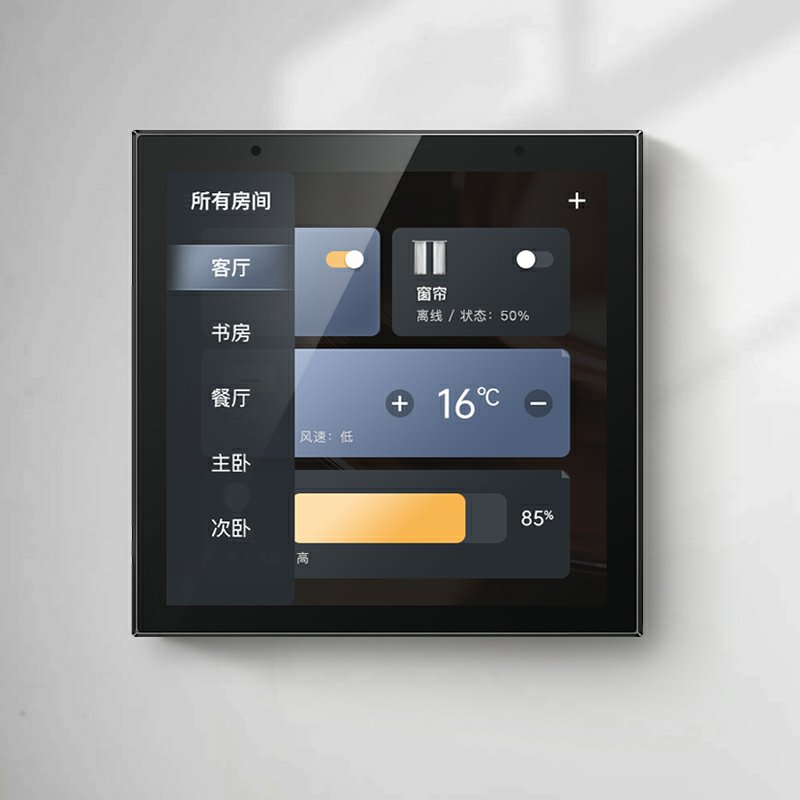
A well-known European home appliance brand, with products sold across 40+ countries, was developing a flagship smart kitchen range hood targeting the premium segment. The design brief called for a seamless, minimalist user interface — no mechanical buttons, no visible bezels — relying entirely on touch interaction through a flush glass surface. The client had previously worked with Asian touch panel suppliers but experienced inconsistent quality, long lead times, and poor responsiveness to design changes.
BestSwitch was introduced through a TDK sourcing contact (one of BestSwitch's long-standing partners). After an initial technical audit of our Xiamen production facility, the client awarded us the development contract for the touch control module.
The kitchen environment is uniquely demanding for touch interfaces:
BestSwitch developed a complete turnkey touch control module combining a projected capacitive (PCAP) touch sensor bonded to a tempered glass cover lens, with custom firmware and LED backlighting:
The touch sensor was designed with a 16 × 10 diamond-pattern ITO electrode matrix on a 0.7 mm soda-lime glass substrate. Mutual-capacitance scanning at 120 Hz enables reliable touch detection even through grease film and gloves up to 1.5 mm thick. The signal-to-noise ratio exceeds 60:1, well above the 40:1 minimum required for kitchen environments.
We implemented a low-power proximity detection mode using self-capacitance on the outer electrode rows. When the user's hand approaches within 10 cm, the panel wakes from sleep (20 µA standby) to active mode (15 mA), illuminating the icon backlighting. This feature is critical to the "invisible UI" design language — no visible markings when the hood is off.
Custom firmware processes touch data to recognize four gestures: tap (on/off), swipe up/down (fan speed 1–6), swipe left/right (light brightness and color temperature), and long-press (boost mode for 10 minutes). The gesture engine uses a simple state-machine algorithm running on the client's main MCU, communicating via I²C at 400 kHz.
The front face achieves IP65 protection through perimeter adhesive sealing between the glass lens and the housing bezel. A hydrophobic oleophobic coating on the glass surface minimizes oil adhesion and makes cleaning easier. The ITO sensor layer is protected by a passivation coating that prevents galvanic corrosion from condensation exposure.
The touch panel module completed certification testing in 14 weeks from project kickoff, with the following outcomes:
"BestSwitch's understanding of both the sensor engineering and the end-user experience made this project smooth from prototype to mass production. The proximity wake feature has become a key selling point."
— Product Manager, European Home Appliance Brand
This project used BestSwitch's custom touch screen manufacturing capabilities. Explore our IMD panel decoration and membrane switch solutions for appliance control interfaces.
From concept to production — our engineering team can help you create the perfect touch interface for your product.
Start Your Touch Panel Project