Real projects. Real results. See how we help our clients bring their products to life.
How BestSwitch helped a German medical device OEM develop a reliable, washable, and antimicrobial control interface for critical-care patient monitors.
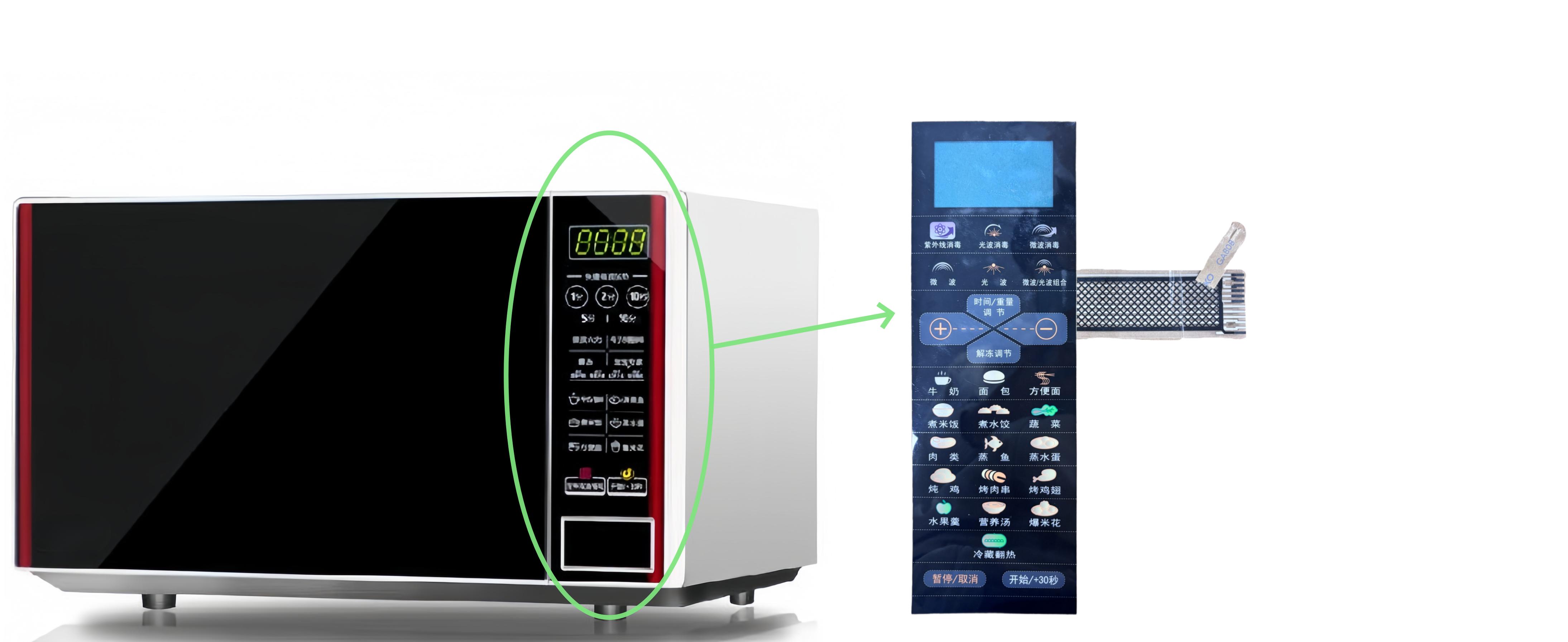
Our client is a mid-sized German medical device manufacturer specializing in emergency care and critical-care monitoring equipment. Their flagship product — a multi-parameter patient monitor used in ICUs, ERs, and ambulances — required a complete redesign of its front-panel user interface. The existing membrane switch keypad from their previous supplier suffered from inconsistent tactile feel, delamination after repeated disinfectant cleaning, and a high field failure rate of approximately 3.5% within the first 12 months.
The client approached BestSwitch through a referral from a mutual partner in the industrial electronics space. After an initial review of their failed samples and performance requirements, our engineering team proposed a complete redesign of the membrane switch stack-up, material selection, and sealing strategy.
Patient monitors in hospital environments face some of the harshest conditions for electronic interfaces:
BestSwitch's R&D team developed a custom five-layer membrane switch stack-up designed specifically for medical environments:
We switched from standard polyester (PET) to 1.5 mm textured polycarbonate (PC) film with a hard-coat finish. PC offers superior chemical resistance to hospital disinfectants compared to PET, and the textured surface hides minor scratches from daily cleaning. An antimicrobial silver-ion additive was incorporated into the coating during screen printing.
Standard acrylic adhesives fail under repeated alcohol exposure. We replaced the entire adhesive stack with medical-grade silicone-based adhesives (3M 9672LE). Silicone adhesives maintain bond integrity through 10,000+ disinfectant wipe cycles, with zero adhesive residue or edge lifting observed in accelerated life testing.
We specified stainless steel snap domes (4 mm diameter, 220 g actuation force) providing a sharp tactile snap with audible click. The 220 gf force was carefully chosen — heavy enough to prevent accidental actuation when the monitor is bumped, yet light enough for comfortable gloved operation over long shifts. Each dome was tested to 2 million cycles with less than 15% force degradation.
The entire switch assembly was encapsulated using a perimeter gasket design with a tight-tolerance tail exit seal. All circuit traces were printed with silver conductive ink and protected with a dielectric coating. The assembled keypads passed IP67 submersion testing (1 meter, 30 minutes) both before and after 500 disinfectant wipe cycles.
To support low-light operation, we integrated SMT-mounted LED backlights behind critical function keys (alarm silence, power, defibrillation sync). The LEDs were encapsulated in a translucent silicone light guide to ensure even illumination without hot spots.
After 14 months of field deployment across 12 European hospitals, the results exceeded expectations:
"BestSwitch didn't just manufacture a keypad — they redesigned it from the ground up based on our real-world failure data. The field reliability speaks for itself."
— Lead Hardware Engineer, Client Medical OEM
This project used BestSwitch's custom membrane switch manufacturing capabilities. Learn more about our medical-grade touch screen solutions and metal dome switch arrays for critical applications.
Send us your requirements or drawings for a free design review and competitive quote within 24 hours.
Contact Our Engineering Team